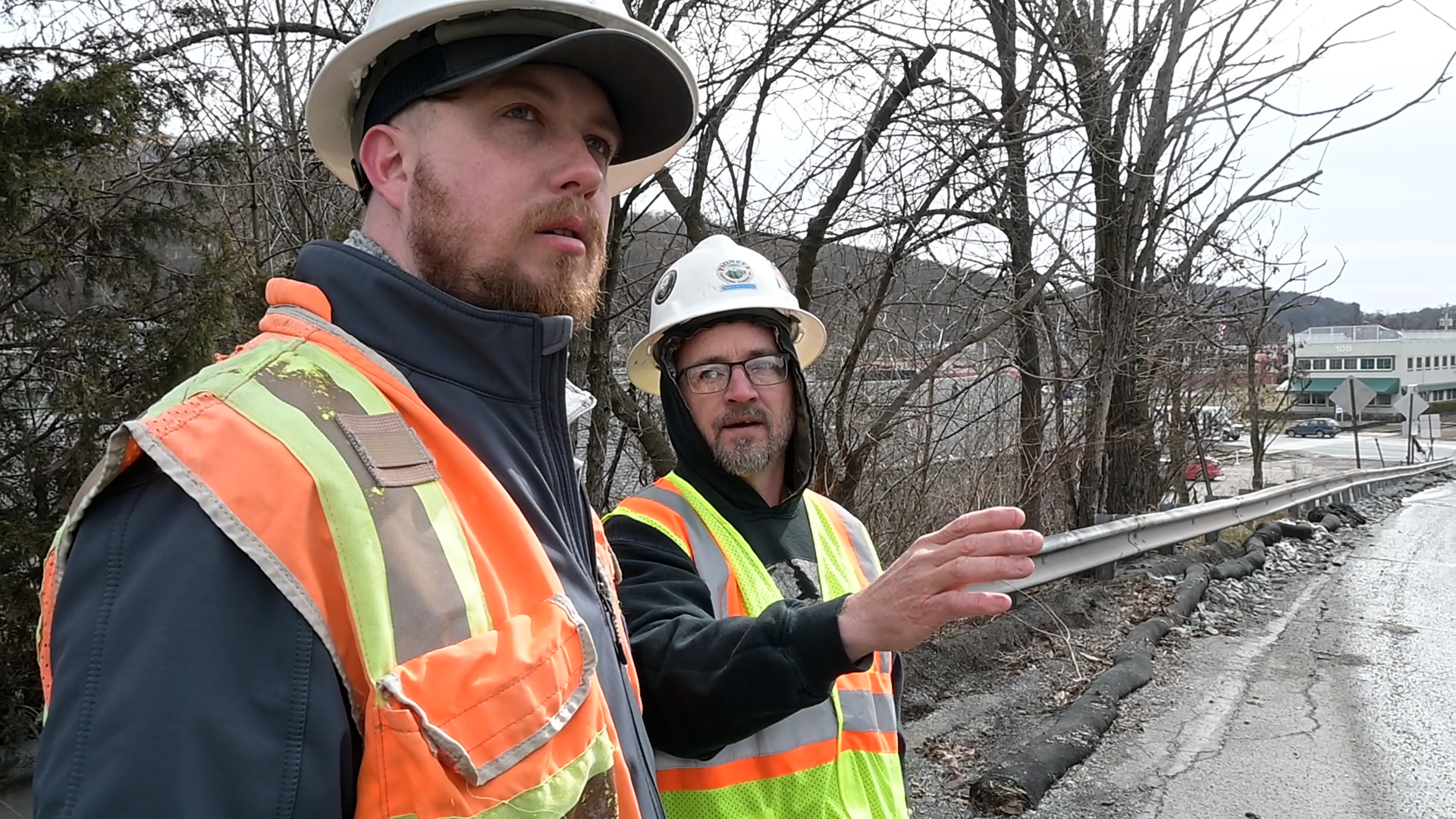
When a catastrophic storm struck Honesdale, PA, local officials were faced with an emergency that threatened critical infrastructure and one of the community’s most recognizable landmarks. What began as a severe weather event quickly became a complex engineering challenge that required close collaboration among multiple organizations.
For Honesdale Borough Director of Public Works, David Nilson, the situation developed rapidly.
“We had a catastrophic rain event with over three inches of rain in an hour,” Nilson said. “At some point the lines came apart under the church and then we saw water coming up out of the ground. Ultimately the ground opened, rocks came out, and water and debris flooded down onto a walking bridge. It was an impossible moment for the Borough.”
As Borough officials assessed the damage, they faced immediate questions. How could they stabilize the area? How would they fund the repairs? And most importantly, how could they prevent a similar failure from happening again?
To answer those questions, Honesdale Borough enlisted the support of JHA Companies. While emergency repairs were necessary, the team quickly determined that a simple replacement would not solve the underlying issue.
“It was determined that the system had aged beyond its operational lifespan, and a complete redesign and realignment was required,” said JHA Project Engineer, Logan Mack, PE, SIT.
“They came up with a very precise plan to remediate the damage at the moment, a workaround to mitigate future damage, and then a plan to fix it,” Nilson said.
“In replacing and realigning the pipes, we were able to upsize the infrastructure to convey large storm events and mitigate flooding,” Mack explained. “We also moved the alignment of the pipes out from private properties and into the public roadway, so that the Borough could more easily maintain the system.”
The urgency of the project was amplified by its location. The pipe separation occurred adjacent to one of Honesdale’s most prominent landmarks—St. John’s Catholic Church (established in 1842). As water rushed from the damaged pipe, it began eroding the ground surrounding the church foundation.
“You are talking a 48-inch pipe, with massive volumes of water coming out,” Nilson said. “It eroded a good portion of the soil from the front of the church. It came close to finding the foundation of the building.”
The situation required immediate action to stabilize the area and protect the historic structure from further damage. Working together, the Borough, JHA, and the contractor, Pioneer Construction, were able to secure the site and implement repairs.
“Now it’s looking good,” Nilson says. “It’s been repaired and the church is still standing happily today.”
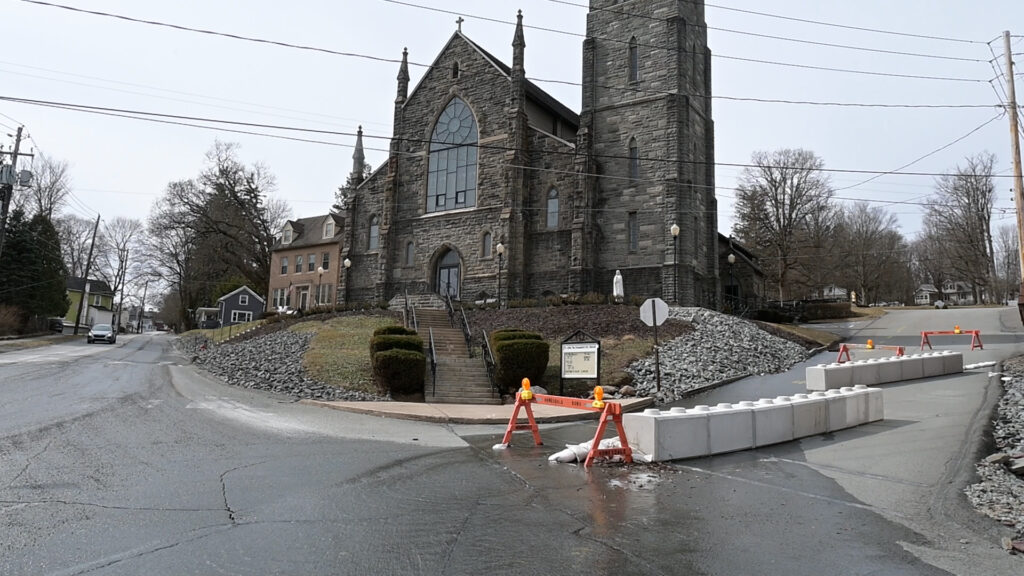
Engineering expertise was only one piece of the puzzle. The damaged infrastructure was located along a major roadway that serves residents, school buses, and first responders. Maintaining access while completing construction became one of the project’s greatest challenges, requiring extensive coordination among local officials, contractors, regulatory agencies, and emergency services.
“Coordination was key,” Nilson said. “It’s a major bus route for the children to go to school. It’s also a major route to get to the other side of the Borough. It was crucial that we worked with the fire department because they also needed access at certain times and closing this artery was not a possibility.”
JHA worked alongside the Borough and Pioneer Construction to navigate permitting requirements and develop a construction plan that balanced efficiency and public access.
“JHA, along with the Borough and Pioneer Construction, worked together to get the permits required to do the open street work in the two state routes impacted by the project,” Mack said. “JHA worked directly with PennDOT to develop a detour plan. It was determined that the best course of action would be a full road closure during nighttime construction when there’s limited traffic and no school traffic. This resulted in the contractor doing construction work from 9 p.m. to 5 a.m.”
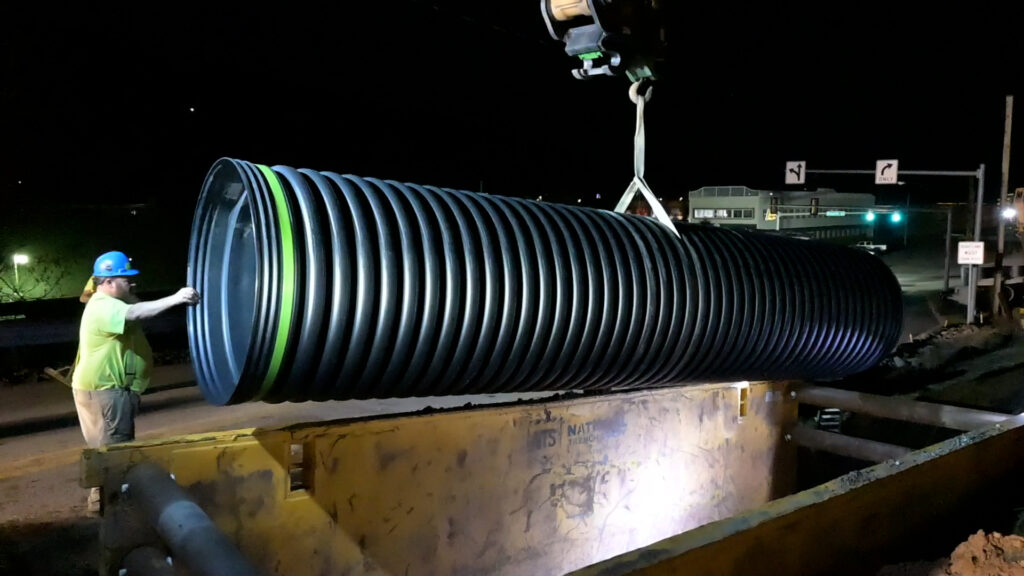
Throughout the project, JHA served as more than a design consultant. The firm provided guidance and communication that kept the project moving efficiently. “That has been a great benefit to my department because it freed me up to take care of the rest of the Borough,” Nilson explains.
For Nilson, the accessibility of the JHA team was just as valuable as their technical expertise.
“Whenever I need anything, I can call Logan or Rocky or any of the staff at JHA. They’re happy meeting me out in the field or answering any questions that I might have or concerns about blueprints or drawings or mechanics. We are very pleased that working with them we were able to accomplish the goal in less than nine months’ time. This is a very important part of the system that is now repaired. I see it lasting for the foreseeable future, if not fifty years.”
For Mack, projects like this demonstrate the value of helping local communities.
“Being able to work with local communities, whether it’s small towns or larger municipal authorities, to assist them and provide leadership and coordination between different entities makes me grateful for the work that I do. The ability to help communities allows me to have pride in my work because I know that I’m helping people.”
For JHA, the project stands as an example of what can be accomplished when technical expertise meets strong relationships.
“We saw a need, we designed a solution, and we met the need,” Mack said. “Doing that pursued the goals that we set as employees, as professionals, and as active members of the community.”


Typically replies within an hour
I will be back soon
Hello there! Have an inquiry? Send us a message, and we'll be in touch soon!

